











Top updates: Trump orders pause on strikes against Iran’s power plants, Tehran says he ‘backed down’
The Iranian government stated that there was no ‘direct or indirect’ conversation with the US president.
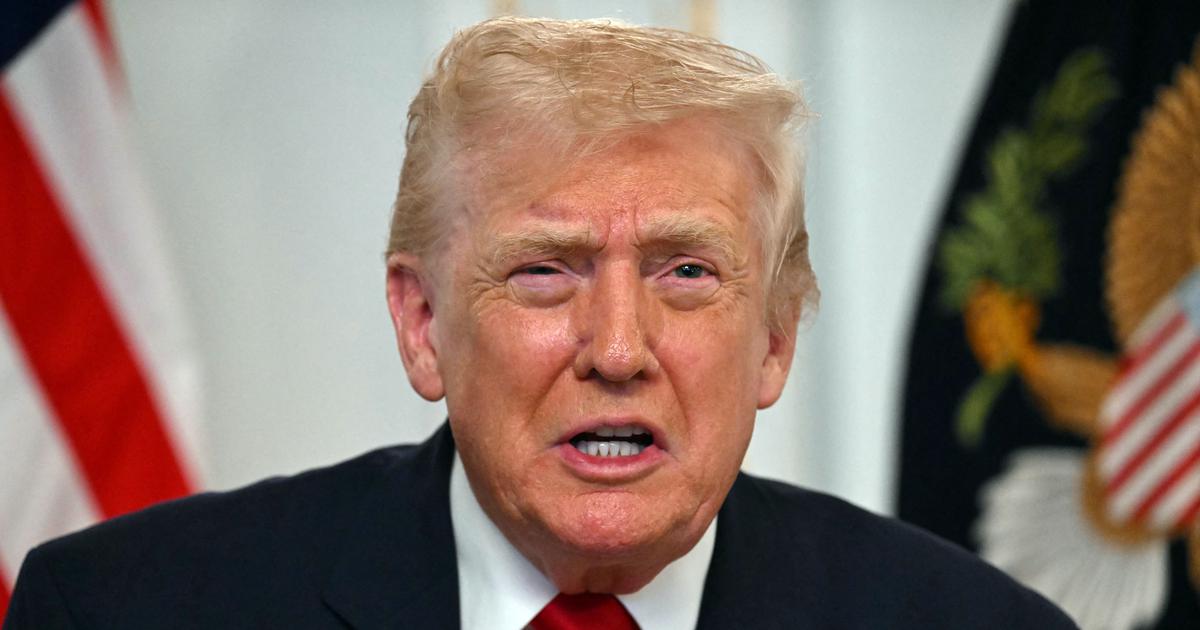
United States President Donald Trump on Monday said that he has directed the Department of War to postpone “any and all military strikes against Iranian power plants and energy infrastructure” for a five day period after “good and productive conversations” between Washington and Tehran.
Shortly after Trump’s statement, Iran’s Fars news agency reported that there was no “direct or indirect” conversation with the US president.
Here are more top updates from the conflict in West Asia:
- Trump also said that the halt in strikes would depend on the success of ongoing meetings and discussions between the two countries.
- However, the Iranian government said that the US president “backed down after hearing that our targets would be all the power plants in West Asia” Fars reported. On Sunday, Iran reiterated its warning that it would strike energy and water infrastructure in the Gulf if Trump follows through on his threat to attack the country’s electricity installations, Reuters reported.
- While speaking to Fox News later, Trump claimed that Iran had said that they are “willing to make a deal”, which the US had agreed to. However, he added that the deal must be “good” and stated that there will be “no more wars or nuclear weapons”.
- The threat had led to concerns in a region that is dependent on desalination for drinking water. On Saturday evening, Trump issued a 48-hour ultimatum to Iran to reopen the Strait of Hormuz, warning that the US will “hit and obliterate” Tehran’s power plants if it fails to comply. Trump’s deadline would end at about 5.15 am on Tuesday Indian time.
- On Monday, Iran’s defence council stated that it would mine “all access routes and communications lines in the Persian Gulf and coastal areas”, AFP reported. This would include deploying “drifting mines deployable from the coasts” if its coastlines or islands were attacked.
- Saudi Aramco, the world’s top oil exporter, has cut crude supply to Asian buyers for a second month in April, Reuters quoted two officials as saying on Monday. Saudi Arabia has exported 4.3 million barrels per day of crude so far in March, the news agency reported, citing data from analytics firm Kpler. This was down from 7.1 million barrels per day in February.
- An Indian citizen was injured by falling debris after an Iranian ballistic missile was intercepted in the United Arab Emirates’ Abu Dhabi, the city’s administration said on Monday. The injury was minor, it said.
- India’s Cabinet Committee on Security on Sunday reviewed the situation in West Asia and discussed measures to mitigate the impact on the country. The Prime Minister’s Office said that a detailed assessment about the availability for critical needs, including food, energy and fuel security, was made.
- The impact of the crisis on farmers and their requirement for fertilisers for the kharif season was assessed and alternate sources for procurement were discussed, the government said. The supply of coal stocks at power plants and measures to diversify India’s sources of imports needed by chemical, pharmaceutical, petrochemical and other industrial sectors was also discussed.
- The Indian benchmark stock indices were down 2.5% on Monday. Asian stocks also continued their fall. As of 12.15 pm Indian time, Hong Kong’s Hang Seng index was down 4%, South Korea’s Kospi had fallen 6.5%, Japan’s Nikkei 3.4% and China’s Shanghai Composite 3.9%.
- South Korean currency Won sank to its lowest level against the United States dollar in 17 years on Monday amid volatility in the market, AFP reported. The value of the currency had fallen to 1,510 won against the dollar.
- Global oil prices remained high amid supply concerns. The benchmark Brent crude was trading at $111 per barrel on Monday. The price was $78 per barrel on February 27, a day before the conflict started. Iran has effectively blocked the Strait of Hormuz, the narrow waterbody connecting the Gulf to the Arabian Sea, for most international commercial vessels since the conflict began. About 20% of global petroleum supply passes through the maritime chokepoint.
- International Energy Agency chief Fatih Birol on Monday warned that the world could suffer its worst energy crisis in decades because of the conflict, France 24 reported. He said that the world was losing 11 million barrels of oil per day, which was more than the two major oil shocks of the 1970s combined, in which five million barrels each had been lost per day.
- One person was killed in the Iranian coastal city of Bandar Abbas, where a radio station was targeted, Al Jazeera reported. In Khorramabad and Urmia, residential areas were targeted, leading to the death of a child.
- Mark Rutte, the secretary general of the North Atlantic Treaty Organization, told Fox News on Sunday that the military alliance has always come together on several security challenges such as Russia’s war on Ukraine. “[When it comes to] the Strait of Hormuz, Iran, I’m absolutely convinced that we’ll get this done together,” he said. “Actually, it is already being planned.”
- Rutte’s comments came after Trump criticised the military alliance for not being there for Washington amid the war on Iran. The US is among 32 North American and European countries, which form the military alliance, who promise to protect each other if any one of them is attacked. Israel is not part of the group.
- The Israeli military said that its own artillery fire had killed an Israeli civilian on the northern border on Sunday, AFP reported. The Lebanese militant group Hezbollah had earlier claimed an attack in the region and Israeli emergency workers had initially said that a man was killed in a “direct hit” on his car by a rocket from Lebanon.
The conflict
The US and Israel launched an attack on Iran on February 28, claiming that Tehran’s action posed an existential threat to Israel. Washington acts as a guarantor of Israel’s security. Iran has retaliated by striking Israel and US military bases in the region, and targeting major cities in Gulf countries and some ships.
Israel has been claiming that Iran is close to obtaining a nuclear weapon, which could alter the regional security balance. Tehran has long maintained that its nuclear programme is for civilian purposes.
Also read:
- Interview: How the war in West Asia could change India’s energy calculus
- Ramachandra Guha: Of the three leaders at the heart of West Asia conflict, who is the most evil?
